.png)
Why Your Ankle Pain Isn’t Going Away (And What To Do)


Ankle pain is one of the most common issues we see at healU+ Wellness & Pilates in Coquitlam. It can start suddenly after a twist or injury, or gradually develop over time due to repetitive stress and poor movement patterns.
While some ankle discomfort improves with rest, many people find that the pain lingers longer than expected — affecting their ability to walk, exercise, or even stand comfortably.
Understanding why your ankle pain isn’t going away is the first step toward recovery.
In this article, we’ll explore:
The most common causes of ankle pain
Key symptoms to watch for
Why some injuries take longer to heal
Evidence-informed treatment options
How a multidisciplinary approach can support recovery
What Is Ankle Pain?
Ankle pain refers to any discomfort, stiffness, or instability in or around the ankle joint. Since the ankle supports your body weight and absorbs impact with every step, even minor injuries can become significant if not properly managed.
Pain may be:
Sharp or dull
Constant or activity-related
Localized or spreading to nearby areas
Why Ankle Pain Happens
Ankle pain is often not caused by a single issue. Instead, it usually results from a combination of injury, overuse, and movement-related factors.
1. Ankle Sprains (Most Common Cause)
Ankle sprains are the leading cause of ankle pain.
Most ankle sprains are lateral sprains, which occur when:
The foot rolls inward
The outer ankle twists toward the ground
Ligaments are stretched or torn
This type of injury often leads to:
Swelling
Bruising
Pain when bearing weight
While mild cases may improve within 7–14 days, more severe injuries can take several months to fully heal.
Early treatment is critical in determining recovery time.
2. Overuse and Repetitive Stress
Repetitive movements without proper recovery can lead to:
Tendon irritation
Chronic inflammation
Reduced mobility
This is common in:
Runners
Athletes
Physically demanding jobs
3. Movement and Biomechanical Issues
Your ankle doesn’t work alone.
Problems such as:
Weak hip muscles
Limited ankle mobility
Poor posture
can increase stress on the ankle joint and slow recovery.

Key Factors That Affect Ankle Pain and Recovery
Understanding these factors can help explain why ankle pain persists:
• Ankle pain is often caused by sprains, especially lateral ankle sprains from rolling the foot inward
• Early treatment plays a critical role in reducing recovery time and preventing long-term instability
• Swelling, bruising, and difficulty bearing weight are common signs of ligament injury
• Repetitive stress and overuse can lead to chronic ankle discomfort and reduced mobility
• Poor movement patterns and weak supporting muscles can increase strain on the ankle joint
• Untreated ankle injuries may contribute to knee, hip, and lower back discomfort over time
• Acupuncture may help support circulation and assist with inflammation management
• Physical therapy is essential for restoring strength, stability, and proper movement patterns
• Massage therapy can help reduce muscle tension and improve tissue recovery
• A multidisciplinary approach — including chiropractic care and home exercises — often supports more effective recovery
These factors highlight why a comprehensive, structured approach is important.
Common Symptoms of Ankle Pain
Symptoms can vary depending on the severity and cause.
You may experience:
Pain when walking or standing
Swelling and stiffness
Bruising
Reduced mobility
Instability or weakness
In more severe cases:
Difficulty bearing weight
Ongoing discomfort even at rest
Why Early Treatment Matters
Many people delay treatment, hoping the pain will resolve on its own.
However, without proper care, ankle injuries can lead to:
Chronic instability
Recurrent sprains
Compensatory strain in other areas
Early intervention helps:
✔️ Reduce recovery time
✔️ Improve healing quality
✔️ Prevent long-term complications
Treatment Options for Ankle Pain
At healU+ Wellness & Pilates, we focus on a multidisciplinary approach to support recovery.
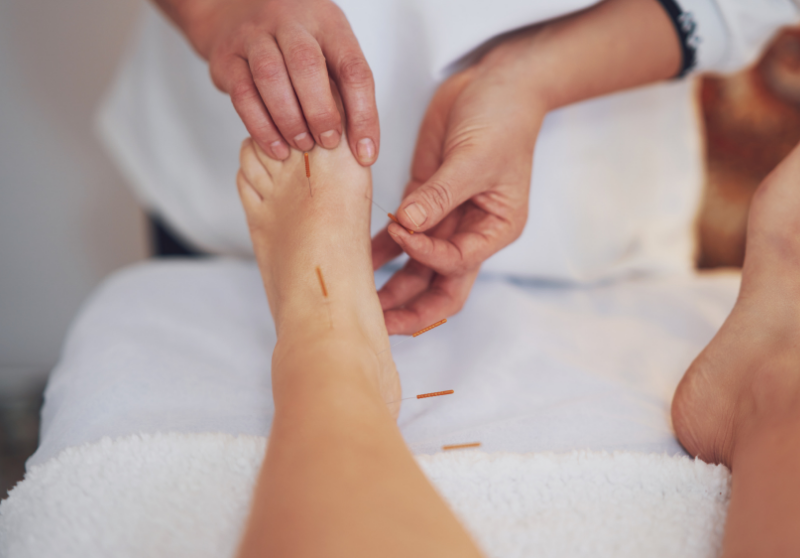
1. Acupuncture
Acupuncture may help:
Support circulation
Assist with managing inflammation
Promote the body’s natural healing response
2. Physical Therapy
Physical therapy focuses on:
Strengthening muscles
Improving joint stability
Restoring movement patterns
3. Registered Massage Therapy (RMT)
Massage therapy can:
Reduce muscle tension
Improve circulation
Support tissue recovery
4. Chiropractic Care
Chiropractic treatment may help:
Improve joint alignment
Restore movement mechanics
Reduce stress on surrounding structures
5. Home Care
Recovery continues outside the clinic:
Rest and activity modification
Ice or heat (depending on stage)
Gradual return to movement
Targeted exercises

Rehabilitation and Long-Term Recovery
Once pain is managed, rehabilitation becomes essential.
This includes:
Strength training
Balance exercises
Mobility work
At healU+, we often incorporate Pilates-based rehabilitation to improve:
Stability
Coordination
Overall movement quality
Why Choose healU+ Wellness & Pilates
At healU+ in Coquitlam, we provide integrated care including:
Acupuncture
Physiotherapy support
RMT
Chiropractic
Pilates & rehabilitation
Our team works collaboratively to create personalized treatment plans based on your condition and goals.
Ankle pain may seem minor at first, but without proper care, it can develop into a long-term issue.
Understanding the cause, addressing it early, and following a structured treatment plan can help:
Improve mobility
Reduce discomfort
Prevent future injuries

Call to Action
📍 healU+ Wellness & Pilates
3041 Anson Ave #202, Coquitlam
📞 (604) 475-8275
Book your consultation today and start your recovery journey.

Comments