.png)
Frozen Shoulder (Adhesive Capsulitis): Causes, Symptoms, and the Most Effective Treatment Options


Why Your Shoulder Feels Stiff and Painful — And How Integrated Care at HealU+ Can Help You Recover Faster
Shoulder pain that gradually progresses into stiffness can significantly affect your daily life. Simple movements such as reaching overhead, fastening a seatbelt, or putting on a jacket may become increasingly difficult.
If your shoulder feels restricted or “frozen,” you may be experiencing Frozen Shoulder, medically known as Adhesive Capsulitis.
At HealU+ Wellness & Pilates, we provide an integrated, multidisciplinary approach designed to reduce pain, restore mobility, and prevent long-term stiffness.
This comprehensive guide explains:
What frozen shoulder is
Why it develops
Who is most at risk
How it differs from rotator cuff injuries
Why diabetes increases risk
The most effective treatment strategies
What Is Frozen Shoulder?
Frozen shoulder is a condition characterized by:
Progressive pain
Increasing stiffness
Reduced range of motion
It occurs when the capsule surrounding the shoulder joint becomes thickened and tight. Over time, inflammation leads to scar tissue formation. This reduces joint space and limits movement.
The shoulder joint normally allows extensive motion in multiple directions. In frozen shoulder, this motion becomes progressively restricted.
Causes of Frozen Shoulder

Frozen shoulder often develops without a clear traumatic injury.
Common contributing factors include:
Aging
Reduced shoulder use
Prolonged immobilization
Degenerative soft tissue changes
Inflammation of the joint capsule
In many cases, the exact cause remains unclear. However, the underlying mechanism typically involves:
Inflammation of the joint capsule
Thickening of capsule tissue
Formation of adhesions
Reduced joint space
Restricted movement
The Three Stages of Frozen Shoulder
Frozen shoulder progresses through three stages.
1. Freezing Stage
Increasing shoulder pain
Pain worse at night
Gradual loss of motion
This stage can last from 6 weeks to 9 months. Pain is usually the dominant symptom.
2. Frozen Stage
Pain may decrease
Stiffness becomes more pronounced
Daily activities become difficult
This stage may last between 4 and 12 months. Movement restriction is most noticeable during this period.
3. Thawing Stage
Gradual improvement in mobility
Reduced stiffness
Improved functional use of the shoulder
This stage may last several months. With treatment, recovery time can be significantly reduced.
Symptoms of Frozen Shoulder
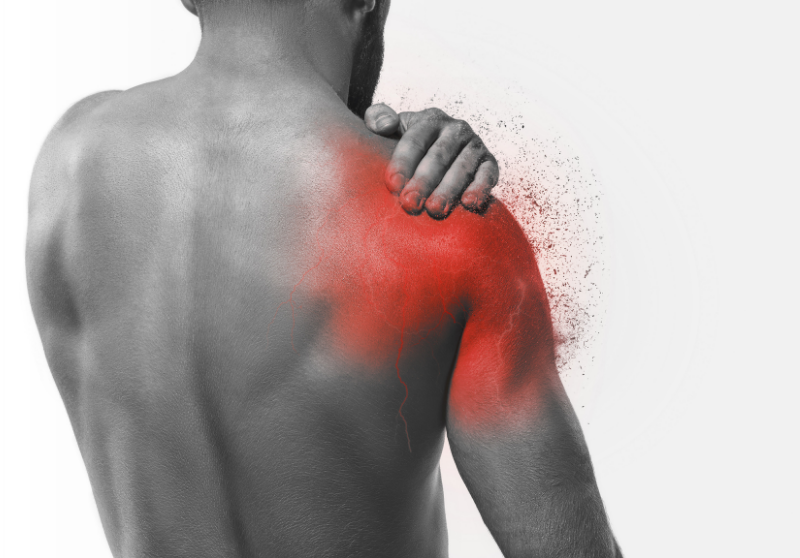
Common symptoms include:
Dull or aching shoulder pain
Pain radiating into the upper arm
Significant stiffness
Difficulty lifting the arm
Trouble reaching behind the back
Night pain disrupting sleep
Symptoms typically develop gradually rather than suddenly.
Who Is at Risk?
Certain individuals have a higher likelihood of developing frozen shoulder.
Increased Risk Factors
Adults between 40 and 60 years old
Individuals with diabetes (three times greater risk)
People with thyroid disorders
Individuals recovering from surgery or injury requiring immobilization
Stroke patients or individuals with limited shoulder use
Frozen Shoulder vs. Rotator Cuff Injury
Differentiating between these two conditions is important.
Frozen Shoulder
Global restriction of movement
Both active and passive movement limited
Gradual onset
Rotator Cuff Injury
Pain with specific movements
Passive movement often preserved
Frequently linked to trauma or overuse
Proper clinical evaluation ensures accurate diagnosis.
Why Lack of Movement Worsens the Condition
When shoulder movement decreases:
Synovial fluid circulation is reduced
The capsule thickens
Adhesions form
Scar tissue develops
This creates a cycle:
Pain → Reduced movement → Increased stiffness → More pain
Early intervention interrupts this cycle.
Most Effective Treatment Options
At HealU+, we apply a multidisciplinary strategy. Frozen shoulder rarely resolves quickly without structured care.
A combination of the following can accelerate recovery:
1. Acupuncture
Acupuncture may:
Reduce inflammation
Improve circulation
Decrease pain perception
Promote healing
It is particularly effective during the painful freezing stage.
2. Physiotherapy

Physiotherapy is central to recovery and includes:
Controlled stretching
Range of motion exercises
Capsular mobilization
Progressive strengthening
Postural correction
Clinical Pilates may be incorporated to improve shoulder mechanics and core stability.
3. Registered Massage Therapy

Massage therapy addresses:
Muscle guarding
Secondary neck tension
Upper trapezius tightness
Circulatory restriction
It complements mobility restoration.
4. Chiropractic Care
Chiropractic treatment may:
Improve joint mechanics
Address cervical spine involvement
Correct posture-related strain
Shoulder dysfunction often affects spinal alignment.
5. Medication
Short-term anti-inflammatory medication may assist with pain management during acute stages but does not restore mobility.
6. Home Care
Patients are guided in:
Daily gentle mobility exercises
Heat therapy
Activity modification
Postural correction
Consistency significantly influences outcomes.
Frozen Shoulder and Diabetes
Individuals with diabetes often experience:
Greater capsular thickening
Increased stiffness
Longer recovery timelines
Blood sugar management plays an important role in healing.
Early treatment is particularly important for diabetic patients.
Recovery Timeline
Without treatment, frozen shoulder may take 1–3 years to fully resolve.
With integrated care, many patients experience significant improvement within 3–6 months.
When to Seek Treatment
You should book an assessment if:
Shoulder pain persists longer than two weeks
Motion becomes progressively restricted
Night pain disrupts sleep
Daily tasks become difficult
You have diabetes and shoulder stiffness
Early evaluation prevents chronic progression.
Why Choose HealU+ Wellness & Pilates?
HealU+ provides comprehensive care under one roof:
Acupuncture
Physiotherapy
Registered Massage Therapy
Chiropractic
Kinesiology
Clinical Pilates
Our collaborative model ensures:
Thorough assessment
Personalized treatment plans
Coordinated rehabilitation
Faster functional recovery
Frozen shoulder can be frustrating, but recovery is achievable.
With proper diagnosis and integrated treatment, patients can progress from painful stiffness to restored mobility and long-term shoulder health.
If you are experiencing shoulder stiffness or pain, early intervention makes a significant difference.
📍 HealU+ Wellness & Pilates
3041 Anson Ave #202 Coquitlam, BC V3B 2H6
📞 (604) 475-8275
Book your consultation today and begin your recovery journey.

Comments